Mountain Skills: 10 Common Mistakes When Digging a Snow Profile
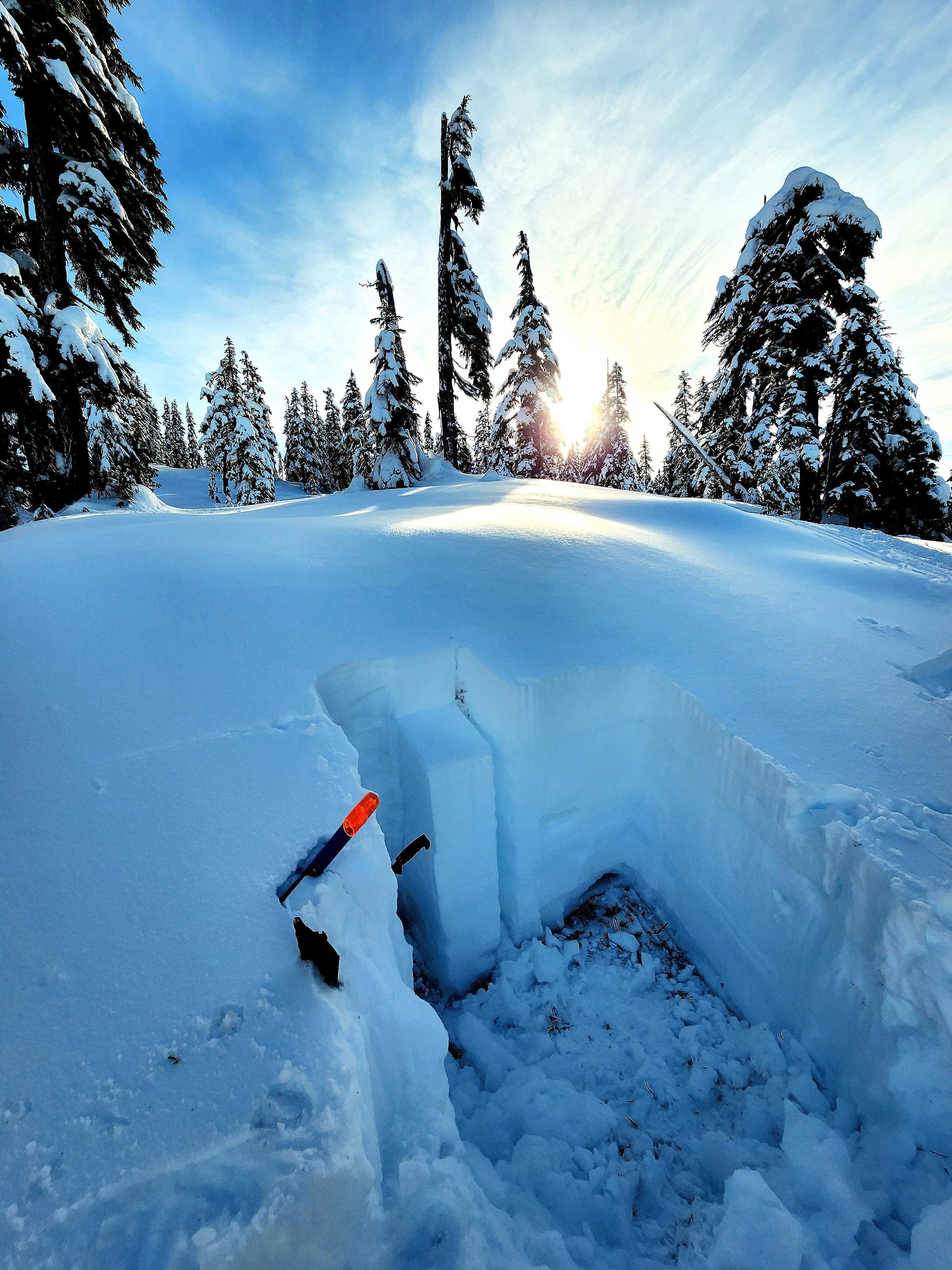

For backcountry skiers and riders, snow profiles are a mountain skill for assessing avalanche risk and understanding the snowpack structure. However, even with the best intentions, there are a few common mistakes that can lead to inaccurate data, misinterpretations, and potentially dangerous decisions in the mountains. Whether you're new to backcountry skiing or an experienced backcountry enthusiast looking to refine your skills, it's essential to avoid these errors when digging a snow profile. In this post, we'll explore 10 of the most common mistakes and offer tips on how to improve your snow profiling technique, ensuring you have the most accurate and reliable data to guide your decisions in the field.
Here are the top 10 mistakes:
-
Digging the Profile Without a Reason
Before you even start digging a snow profile, it's important to have a clear intention. Are you looking at how the new storm snow is bonding to the previous surface? Or are you tracking a persistent weak layer that could pose a danger? The purpose behind digging the profile determines the observations you’ll make, the tests you’ll perform, and even the location for digging. While curiosity about the overall snowpack structure in a new area is a valid reason to dig, always remember that the information you obtain will be specific to the location of the pit and may not be applicable to the greater area (more on this later). Understanding your objective will help you gather relevant data and avoid wasting time or overlooking critical factors. -
Digging in the Wrong Spot
The location where you dig your profile is crucial. It should always be representative of a slope you intend to ski on, or feature terrain characteristics that match the layer you're investigating. For example, if you're searching for a sun crust layer, it makes sense to dig on a solar aspect. Avoid digging in places that put you at risk! Entering an avalanche slope to dig a profile is deciding that the slope is safe before gathering the data to support that decision. Areas like exposed ridge tops or slopes with previous skier traffic should be avoided as they will have an altered snowpack structure that is unlikely to yield high-quality information. -
Not Probing the Profile Site
When you take the time to dig a snow profile, it’s a shame to have a tree, boulder, or other obstruction in the middle of your pit. Not only will this prevent proper observations and tests, but it will change the structure and layering of the snowpack. Always probe the area where you plan to dig the profile to ensure there are no obstructions. This extra step will save you time and effort, and ensure your profile is representative of the actual snowpack conditions. -
Wrong Orientation and/or Use of Test and Observation Walls
There’s a purpose for each wall you create when digging your snow profile, and this will be reflected in the orientation of your profile on the slope. It's important to ensure the observation wall is shaded from the sun to preserve the layers as much as possible. The test wall should be perpendicular to the slope’s fall line so that tests can be performed properly and lead to accurate results. Observations such as marking layers and feeling snow hardness should not be made on the test wall, as disturbing the snowpack structure can alter test results. -
Poor Craftsmanship
When it comes to digging your snow profile, craftsmanship matters. Straight walls and square corners improve the accuracy of your observations and are essential when it comes time to perform tests. If a column is leaning into the back cut, it may appear stronger in testing, or if the column is leaning to a side that has been isolated, it will likely be unstable and weaker in testing. Not completely isolating our column, or having wavy or tapered cuts can alter our test results in ways that will not represent the true nature of the layers in question. -
Column Dimensions Are Wrong
When performing tests like the compression test or extended column test, it's important to ensure the column dimensions are correct. For example, a compression test column should not exceed 120 cm in depth, as a taller column becomes wobbly and unstable, which compromises the integrity of the test. If the layer in question is too deep to be isolated within a 120 cm column, consider using a deep tap test instead of increasing the height of the column.
Other dimensions are just as important: a compression test should measure 30 cm by 30 cm, while an extended column test should be 30 cm by 90 cm and should not exceed 100 cm in depth as the loading steps rarely affect deeper layers. These dimensions are not only important for the integrity of the column, but ensure that when our results are shared they are representative of industry standards. -
Wrong Test for the Current Problem
The test you perform should be suited to the specific snowpack problem you’re investigating. A compression test tells us nothing of propagation potential, only how much force is required for a layer to fail. An example of the implications of this would be performing a compression test on a surface hoar layer - it should not be surprising if the SH layer fails during this test, and stopping here might lead us to exaggerate the likelihood of an avalanche on this layer! An appropriate test would be an extended column test or a propagation saw test, as these demonstrate the propagation potential of the weak layer and overlying slab. Always choose the right test for the issue at hand to avoid misleading results.
Prepping a column for testing on a stormy day.
-
Tapping Too Hard, Too Soft, or Too Fast
Tapping may seem like a simple task, but the force and speed of your taps can make a significant difference in your results. So how hard should we be tapping? For each increment, the tap should only be as hard as the weight of the limb dropped onto the shovel, no additional muscle is required. For the easy taps, rest your wrist or forearm on the shovel, raise the hand up off the blade, then simply drop the hand onto the shovel. For medium taps, the forearm hinges at the elbow, and the weight of the forearm and hand is dropped onto the shovel. For hard taps, raise the arm from the shoulder and just drop the weight of the extended arm onto the shovel. The speed of the taps should offer enough time to observe the effect of each tap before the next tap strikes the column. In addition to this, make sure the shovel blade is centered on the column when tapping and not digging into the wall behind the column. -
Focusing on Results That Don’t Mean Anything
When performing snow profile tests, it’s easy to become fixated on results that ultimately don’t hold much weight. Interpreting our results and observations is the most difficult part of digging a snow profile and it takes both practice and good mentorship to become proficient. When performing compression tests, learning about fracture character is key to gleaning meaningful information from our efforts, and there are two that stand out above the rest. Sudden collapse and sudden planar results are the strongest indicators that a layer has the potential for avalanche initiation, whereas a progressive collapse or resistant planar result are less conclusive. Each test result must be interpreted correctly, and hyper-focusing on minor storm instabilities may lead to missing out on the bigger picture. -
Applying Profile Observations and Tests Too Broadly
After the effort of digging and conducting tests, it’s tempting to apply your findings across the entire landscape. However, snowpack conditions can vary significantly from one area to another. The results you gather are specific to the exact location where you dug the profile, and applying them too broadly can lead to misleading conclusions. While your data may be high-quality, it’s just a small piece of the larger puzzle. Gather more data before gaining confidence in your conclusions, and always use your findings in context.
Mountain Skills: Closing Summary
Snow profiles are valuable tools for all backcountry travelers, offering insight into the snowpack and guiding avalanche risk assessments. Yet, as we've explored, creating an accurate and meaningful profile requires skill, attention to detail, and a willingness to continuously learn. Even the most experienced backcountry enthusiasts make mistakes, and no profile is ever perfect.
However, this is precisely what makes snow profiling such a rewarding process: the pursuit of excellence and the opportunity to refine your techniques with every pit you dig. By understanding common pitfalls—like choosing the wrong location, using incorrect test methods, or misinterpreting results—you can improve the quality of your observations and make better-informed decisions in the field.
Remember, snowpack conditions are dynamic and vary greatly across terrain. While each profile adds to your knowledge, it’s only one piece of a larger, ever-changing puzzle. Strive to improve, stay curious, and approach every outing with the mindset of a lifelong learner. With dedication and practice, you’ll continue to enhance your safety and decision-making in the mountains.
If you're looking to improve your skills and knowledge, consider signing up for one of our courses, including our "Advanced Snow Profile Observations" course, offered to our Aurora Backcountry Pass members. Stay safe and always keep learning!